Where to stay in the valley
The Douro is long, and the half hour between two villages is the difference between a week of short, beautiful drives and a week of long ones.
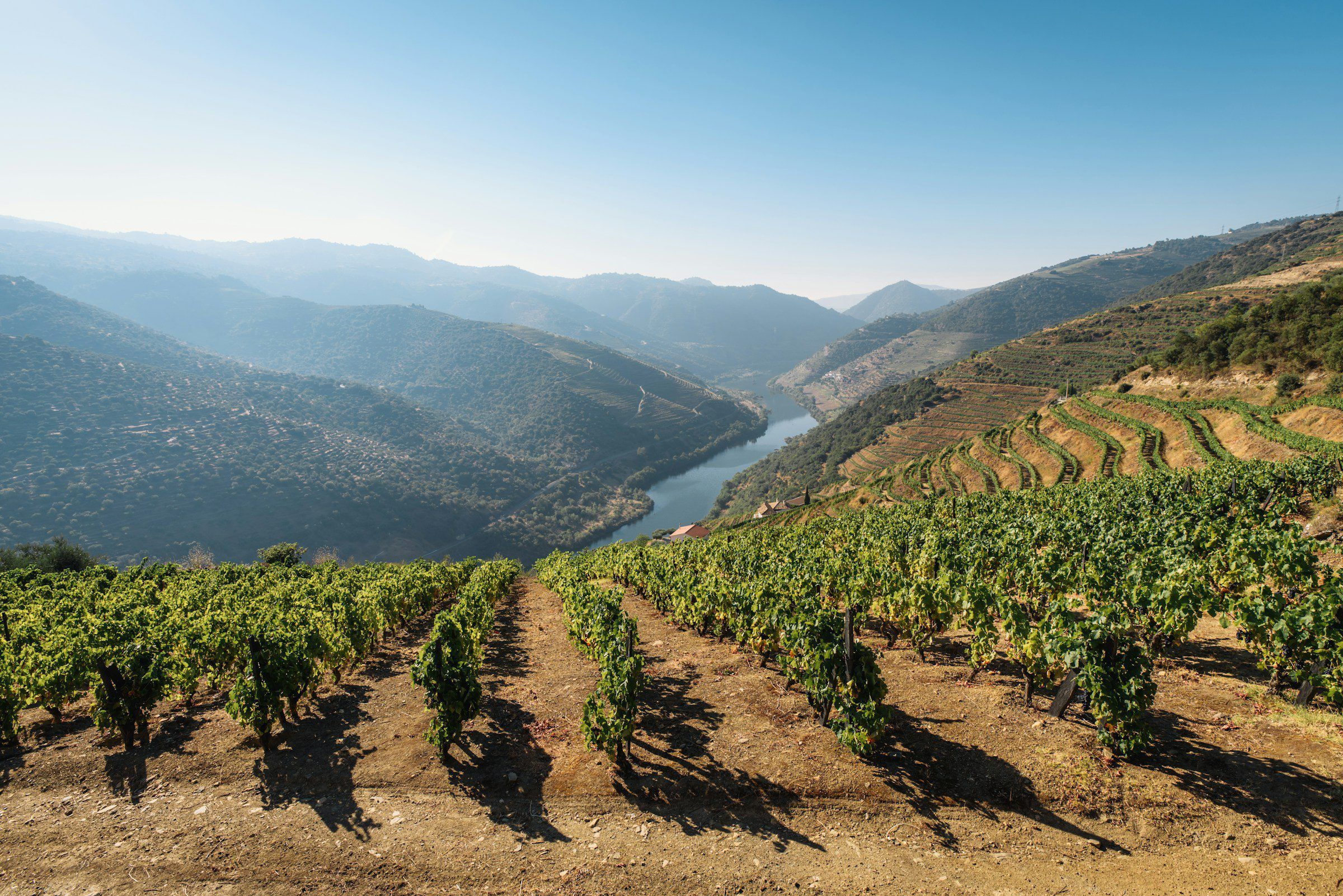
Pinhão is the centre of the classic terraces and the one base that partly works without a car: two well-known estates are walkable from the pier and the railway station, and the boat piers are in the town itself. Above and around it sit the names people come for, at Valença do Douro, Covas do Douro and Gouvinhas.
Peso da Régua is the valley’s hub rather than its beauty spot, and that is the point: it is closer to Porto, at roughly 1.5 hours by road against about 2 hours to Pinhão, with Quinta do Vallado, Quinta da Pacheca and Quinta do Crasto within a short drive. The stretch of the N222 between Régua and Pinhão, roughly 25 to 30 minutes of it, is the most photographed stretch of road in the valley.
Downriver at Folgosa, on the Armamar bank, the valley is quieter and the cluster is smaller: sailing and traditional boats, and an organic estate at the confluence where the Tedo meets the Douro. East of Pinhão the terraces open out towards São João da Pesqueira and the Douro Superior, where the houses are further apart and the heat is serious.
The kinds of houses you will find here
Two shapes, and they feel completely different to stay in.
The first is the estate house. A quinta is a working wine property, so renting the casa means old stone, high ceilings, a long shaded terrace, a mature garden and usually a pool cut into the slope. Housekeeping is normal, a cook can often be arranged through the estate, and the wine on the table is made on the property. The trade is that these are working farms: harvest is noisy, tractors start early, and that is the charm rather than a fault.
The second is the newer river house, built after the view rather than around a vineyard. Glass, dark timber, an infinity pool on the lip of the terraces, and an interior that looks like the architecture magazines that photograph this valley. Fewer of these exist than the photography suggests, and the best of them are booked a long way out.
In both cases the river is below you, not at the door. The Douro is a navigable working waterway managed as such, so your contact with it is from a boat, which is easy to arrange, rather than from the lawn.
When to come, and what the calendar does to availability
The core season is May to October. Inside it, the valley behaves like three different places.
Late spring and early summer are the easy months: green terraces, long evenings, and a valley that is reliably hotter than the coast. August is beautiful and brutal, with highs that can reach 40 C, which is why the pool stops being a nice extra and starts being the plan. Harvest runs roughly 10 September to 5 October, peaking in the last two weeks of September, at a much kinder 28 to 33 C with cool evenings. That fortnight is the hardest in the year to find a good house in, and the one worth asking about first.
Out of season the valley does not close. Winter here is mild, wetter and full of river mist, and the rabelos now sail year-round with closed boats for cold days.
What we arrange around the house
The estates are the reason you came, so we hold visit times for your dates and build the days around them: a wine tour from Pinhão if you are staying up the valley, or a wine tour from Peso da Régua if you are nearer the hub.
The river is the other half of the day. A boat charter from Pinhão puts you on the water from the piers in town, and a Douro boat and wine tour folds the two together. For a day with several estates in it, a chauffeur tour of the Douro Valley means nobody is counting glasses on the switchbacks.
And getting there is worth arranging rather than improvising: a private transfer from Porto to Pinhão, about 2 hours door to door, or the Porto to the Douro Valley transfer for the nearer towns.
How we help you choose
We do not display villas or quintas on this site. You tell us the dates, the group and the budget band you are working to, and we come back with a shortlist that is genuinely free for those nights, drawn from the trusted local agencies and estate owners we work with in the valley, with what each one costs and what it includes.
What makes that shortlist good: your dates and how far they can move; how many of you there are and how many bedrooms that honestly needs; the budget band per week; whether you want a working wine estate or a house built for the view; and the two or three things that decide it, such as a pool, air conditioning that copes with August, a ground-floor bedroom, a kitchen a cook can work in, and whether a hire car is coming or a driver should be arranged.
How the booking works
The booking is made with the estate or the agency, under their contract, their deposit schedule and their cancellation terms, which we get in writing and show you first. The rental registration and licence for the property stay with its owner. We stay your single contact for the tastings, the boat and the car.
Request availability with your dates and your group, and we will come back with real houses and real numbers.